Ask the seller for
- Mileage you can verify. Rides in Strava or another log on this bike, not a number typed into a form.
- When parts were replaced. Chain, cassette, brake pads, tyres — with dates or kilometres.
- Services. Fork and shock services, brake bleeds, bearings; ideally from a workshop.
- The frame number and proof of purchase.
Check on the bike
- Chain wear with a checker: past 0.5% on an 11–12-speed drivetrain (0.75% on 10-speed and older) means a new chain soon, and maybe a cassette.
- Brake pads and rotors: pad thickness, rotor wear line.
- Suspension: smooth travel, no oil on the stanchions, no knocking.
- Frame: cracks near welds and the bottom bracket, dents in tubes, damage at the dropouts.
- Wheels: true, no loose spokes, bearings without play.
Confirmed versus claimed
A mileage confirmed by recorded rides is worth more than a number in an advert: it shows how the bike was ridden and when. A history that starts the day before the sale tells you little.
The frame number
Compare the frame number on the bike with the papers, and check it in a stolen-bike register such as Bike Index before you pay.
The CYCLINGOS passport
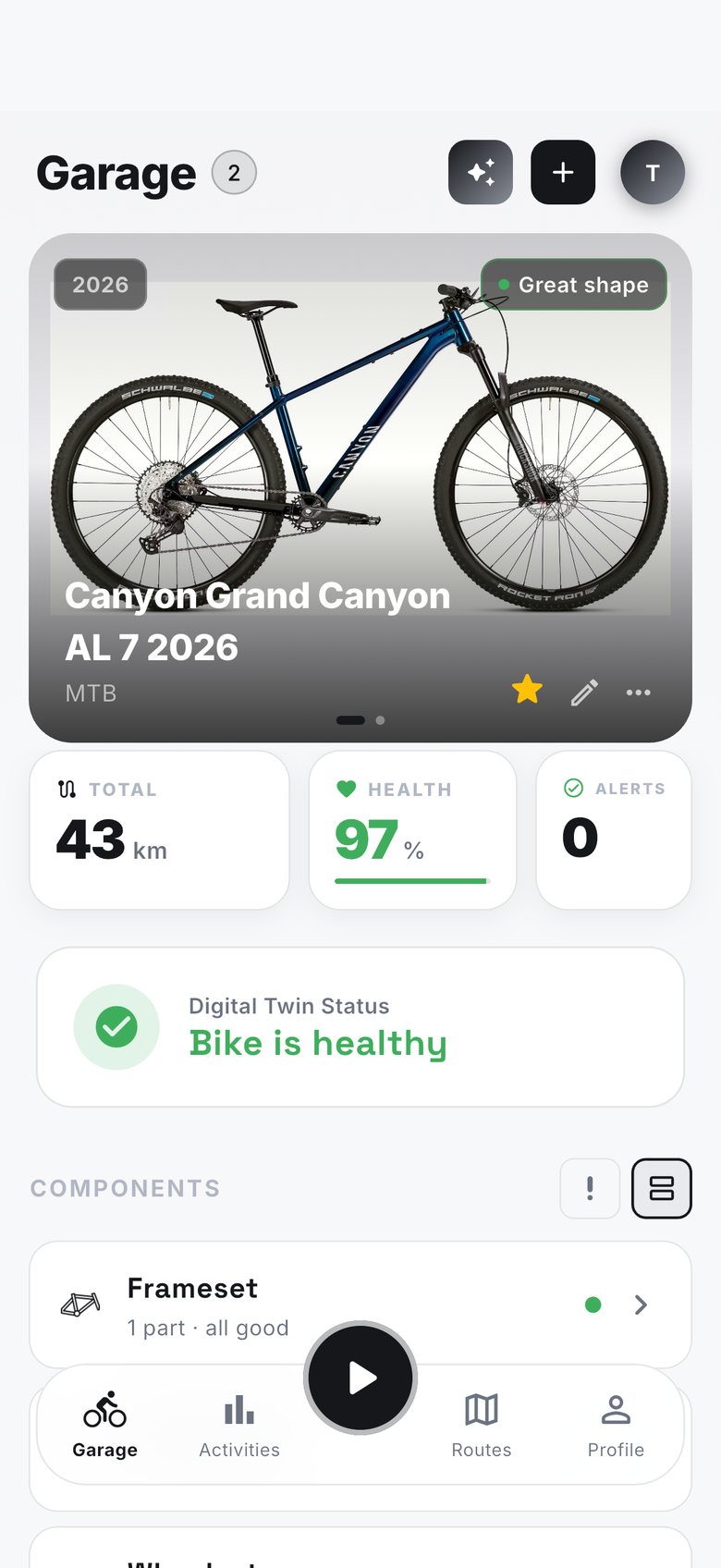
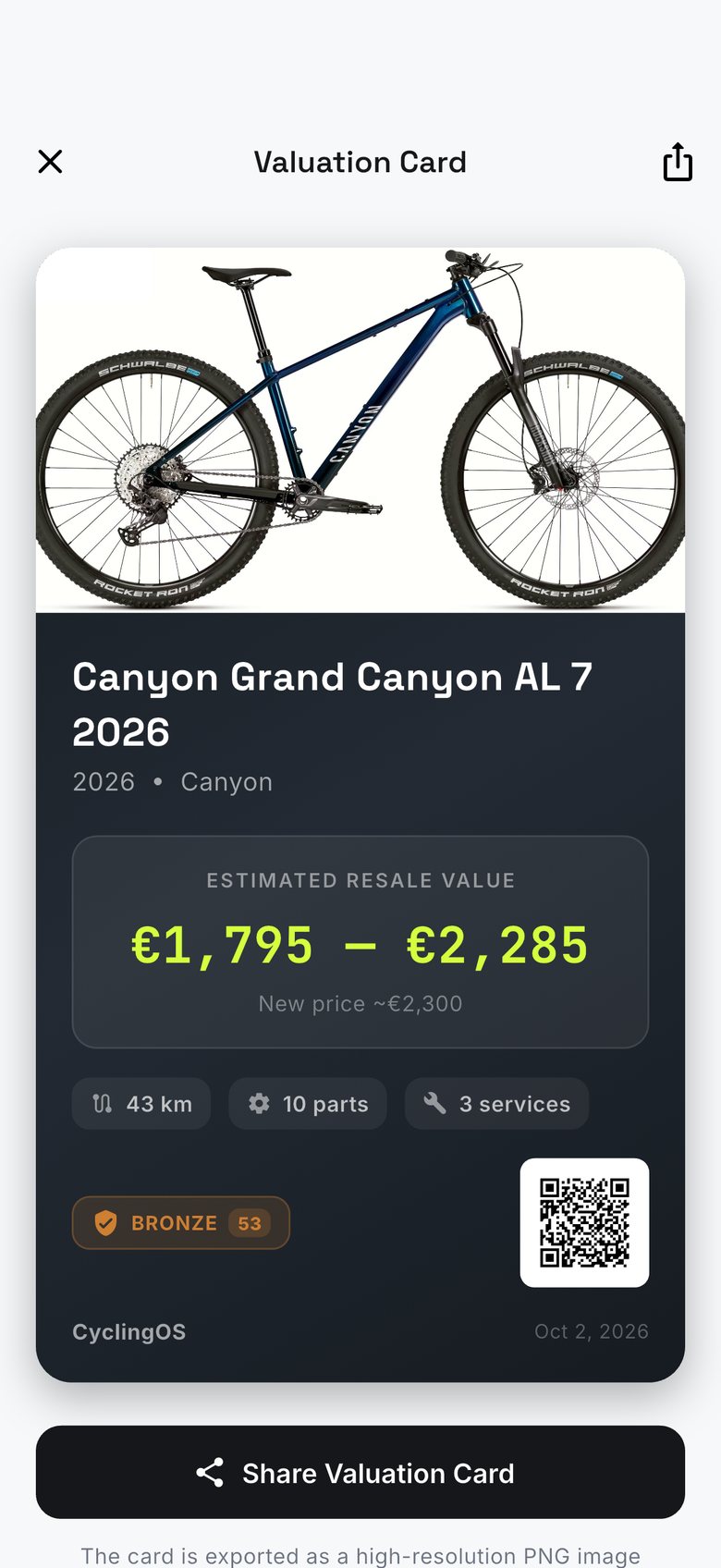
A seller who tracks the bike in CYCLINGOS can send you a passport link. It opens in any browser and shows:
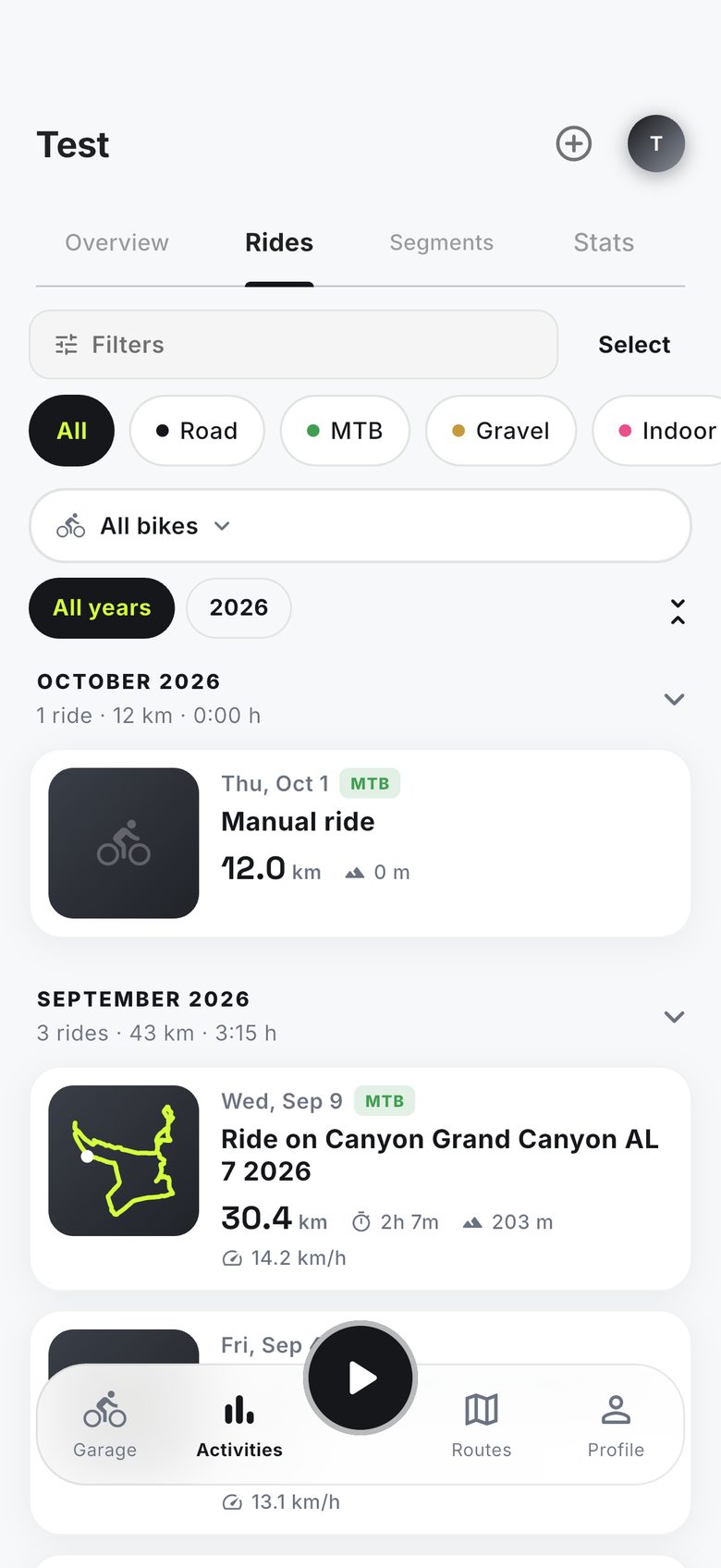
- how much of the mileage comes from real rides (Strava or recorded with GPS) — typed-in kilometres don't count;
- how long the bike has a history;
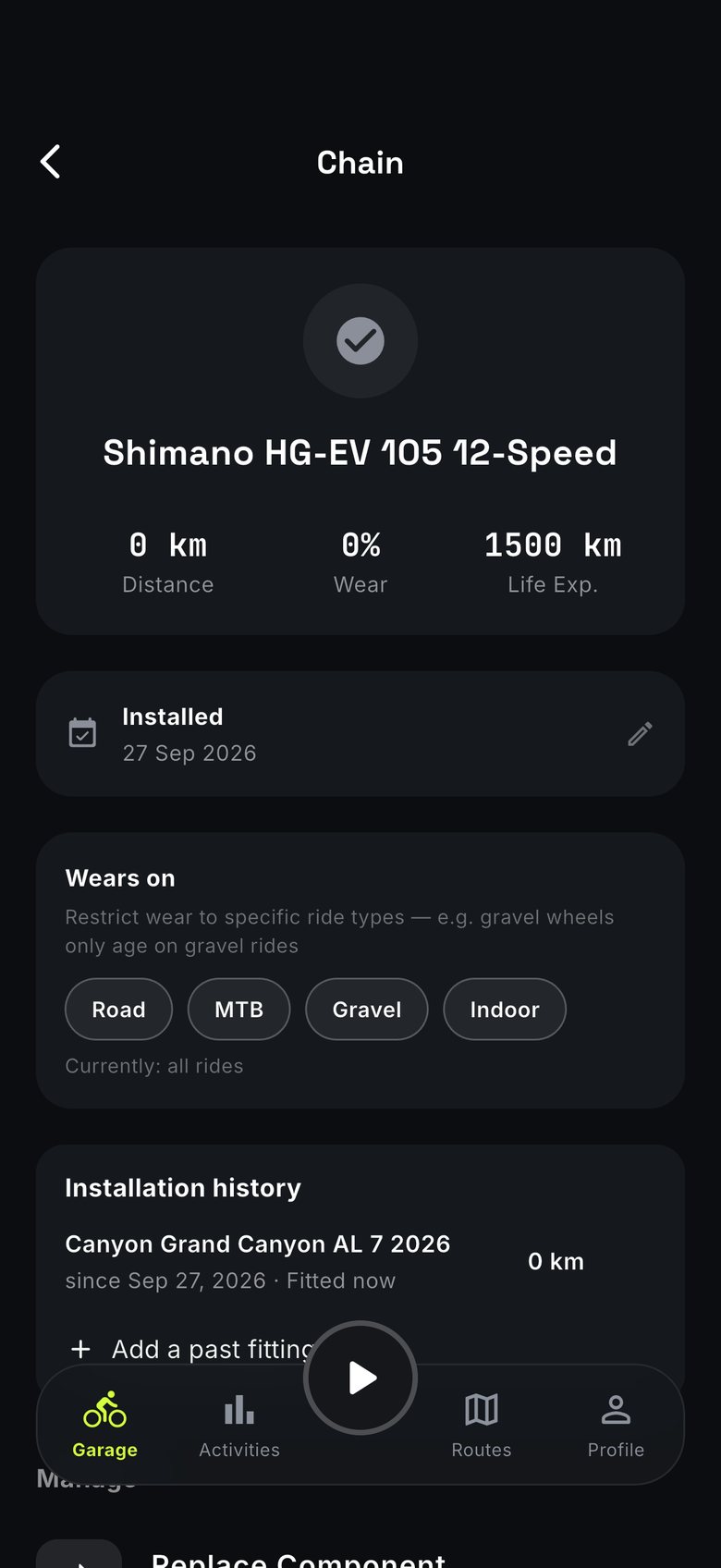
- every part with its install date and kilometres, and the services;
- whether the bike is reported stolen — in CYCLINGOS and, by its frame number, in Bike Index, the worldwide stolen-bike registry.
Verified history means at least 70% of the mileage from rides, at least 3 months of history and 100 confirmed kilometres, and no stolen report.