Bike distance is not part distance
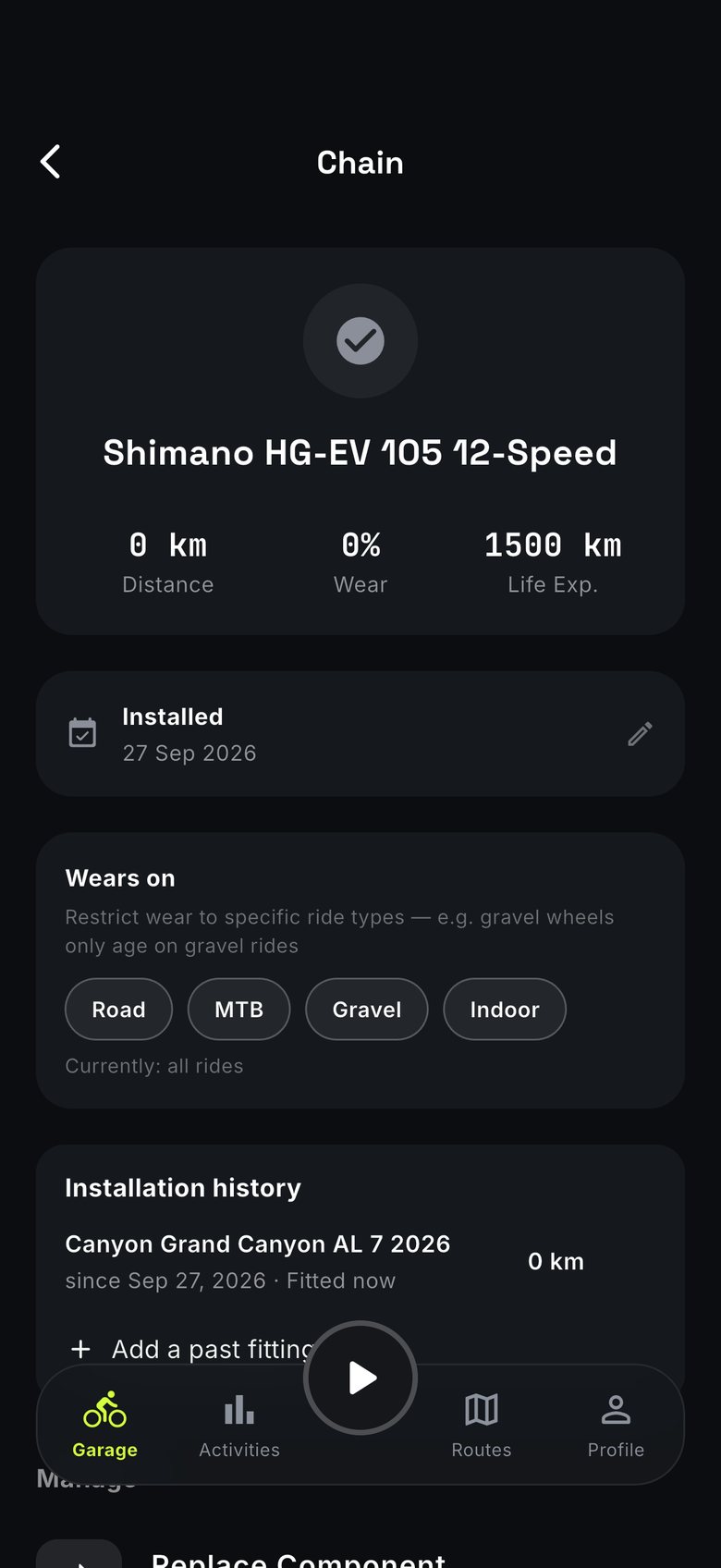
Parts are replaced at different times: the bike may have 8,000 km while the chain has 1,200 and the tyres 300. A reminder based on the bike's total is wrong for every part changed since.
What you need
- Rides matched to the right bike. In Strava every ride carries its gear; a part tracker reads it.
- Each part with its install date. From that day the part collects the distance of rides on its bike.
- A life per part. How far that part usually goes before it needs replacing or a service.
- Rules for special cases. Race wheels only on some rides, a trainer's cassette only indoors.
How CYCLINGOS does it
- Connect Strava once (free on every plan): your history comes in and each ride lands on the bike by its Strava gear. Renames and race tags made later in Strava follow.
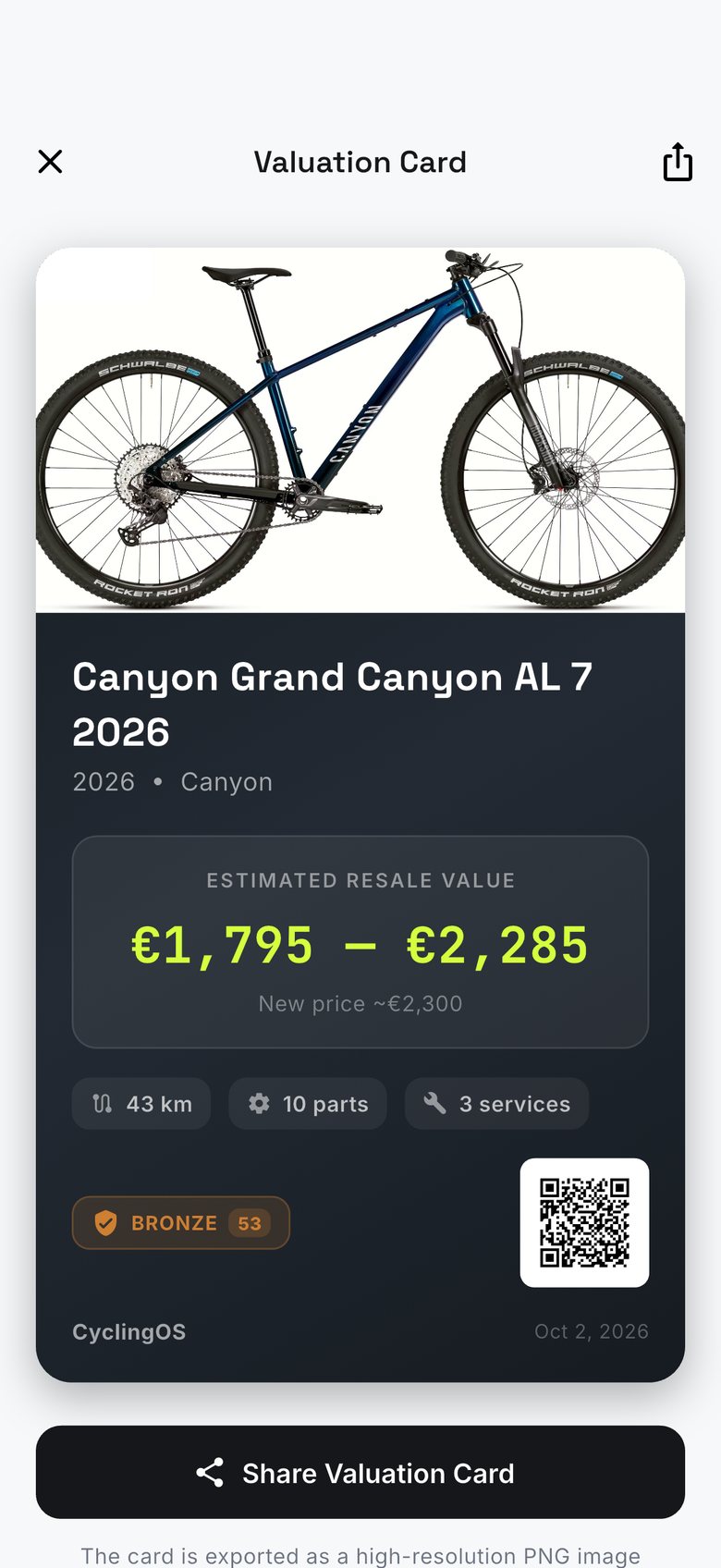
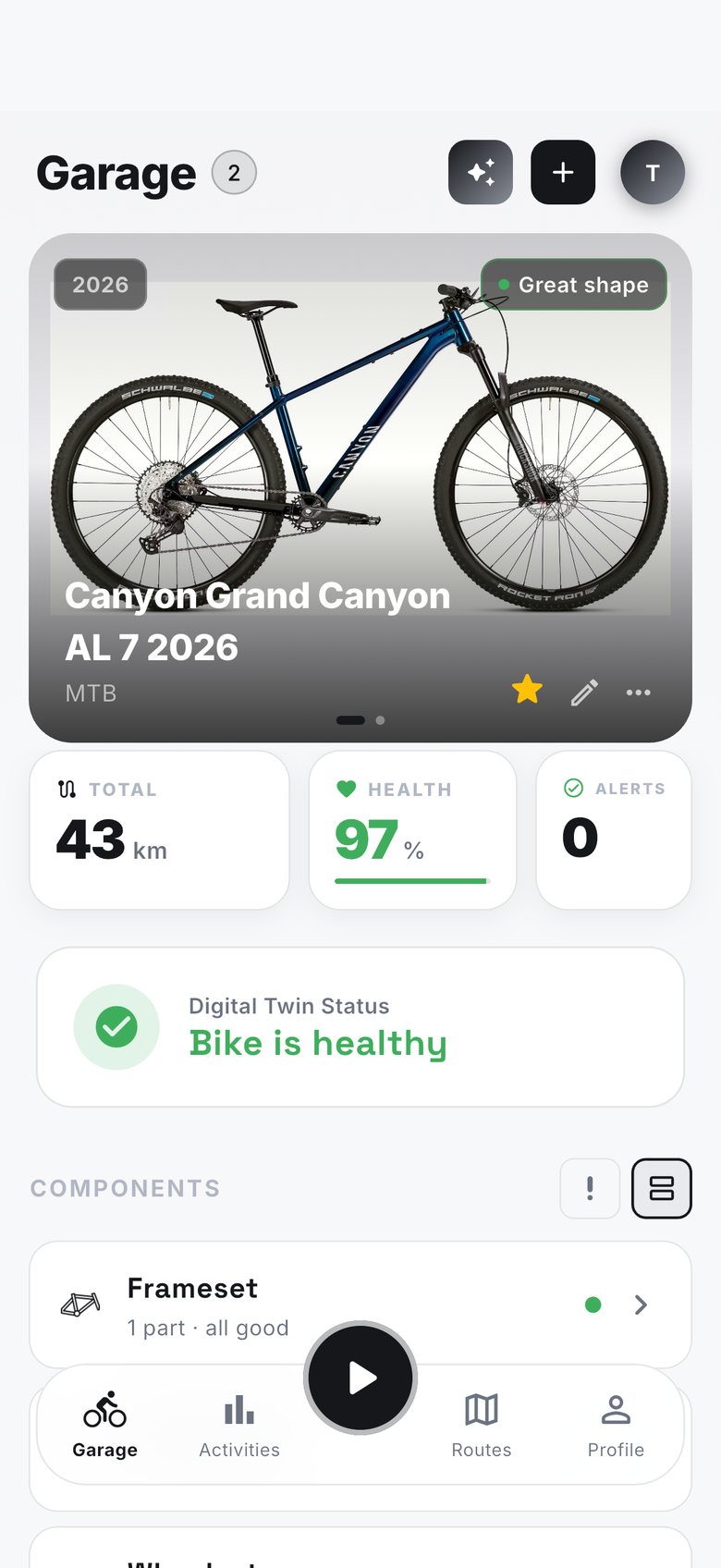
- The bike arrives with its parts. Find it by voice, photo or search among 140,000+ models, and it starts with the parts it left the factory with.
- Each part counts its own kilometres from the day it was fitted; a used bike's earlier kilometres go into its mileage, not into the wear of parts you just fitted.
- Reminders at 80%, 90% and 100% of a part's life; fork, shock and dropper count towards their next service.
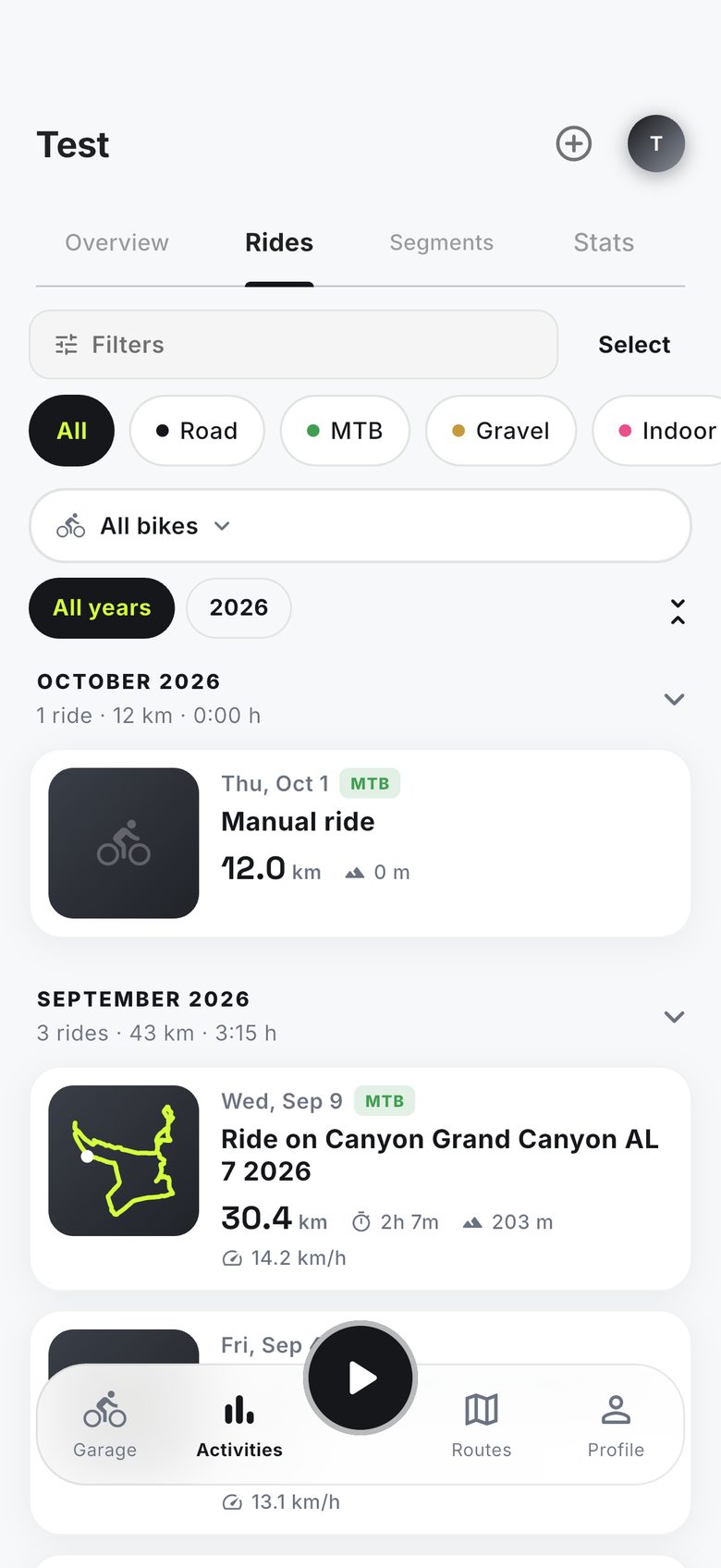
- Not only Strava: rides recorded in the app count the same way; indoor rides count towards the trainer's own parts. A Garmin or Wahoo that syncs to Strava brings its rides in through Strava.