Why a chain “stretches”
The plates don't stretch. The pins and rollers wear, so each link gets a little longer and the chain no longer sits deep in the teeth. It then wears the cassette and chainrings to its own longer pitch. Fit a new chain on worn cogs and it skips under load.
The limits
| Drivetrain | Replace at |
|---|---|
| 11-speed or more | 0.5% |
| 10-speed or fewer | 0.75% |
Source: Park Tool, When to replace a chain.
How to measure
- Chain checker (Park Tool CC-2, CC-4 and similar): drop it into the chain and read 0.5 or 0.75 directly.
- Ruler: line a rivet up with zero and count 24 more rivets; the last one should sit at 12 inches. More than 1/16 inch past it — replace the chain.
Measure every few hundred kilometres once the chain is past half its usual life, and every time it starts to sound or shift differently.
How many kilometres is that
There is no single number: wet and muddy rides, a dirty chain, power and the number of gears all change it. Road chains often reach the limit somewhere between 2,500 and 5,000 km; mountain bike chains in mud much sooner. Measure rather than guess, and note the distance at which your chain wore out — your next one will be close.
Keep the cassette
A rule of thumb many mechanics use: replace the chain on time and one cassette outlasts two or three chains. A chain at its limit costs a chain; a chain far past it costs a chain, a cassette and sometimes chainrings.
How CYCLINGOS helps
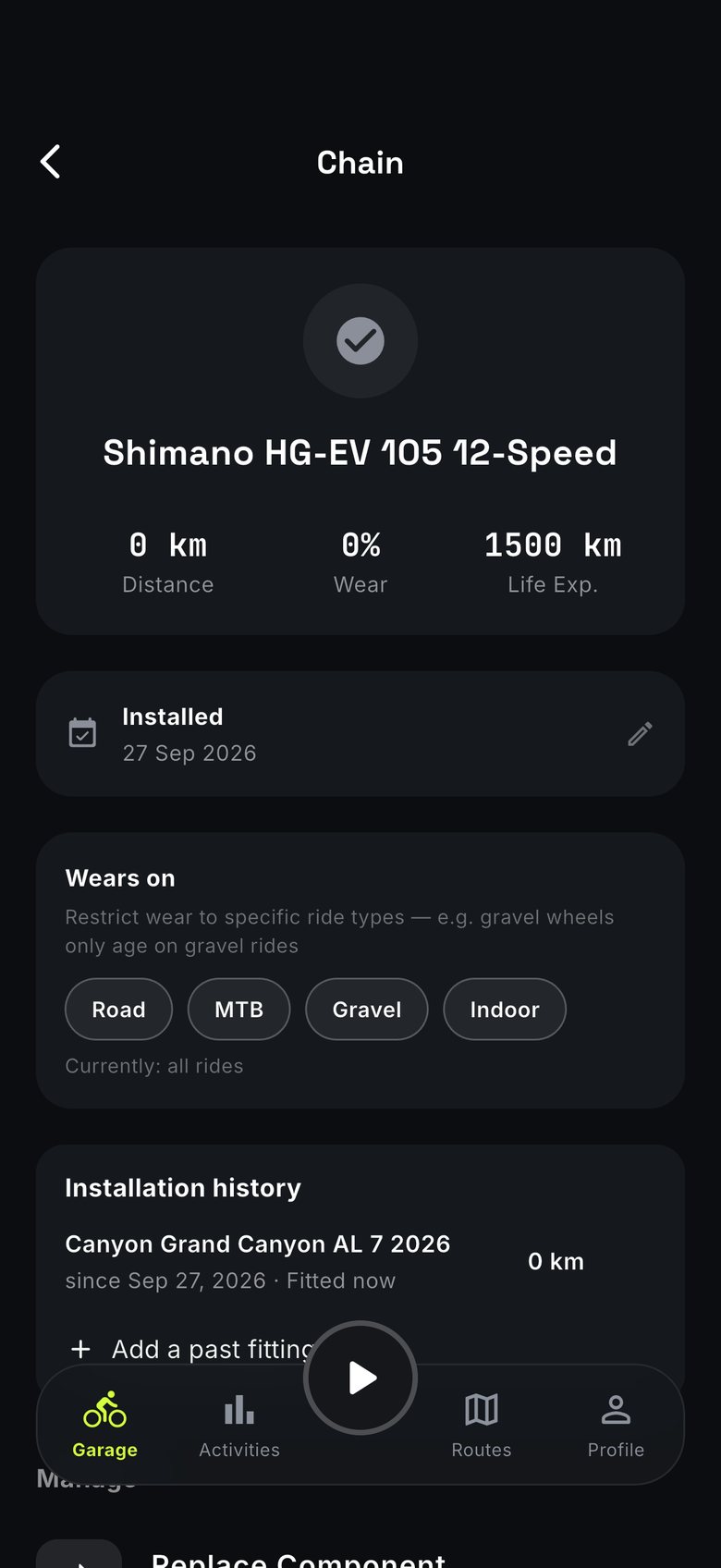
CYCLINGOS counts each part's own kilometres from your rides — from Strava (Garmin and Wahoo rides arrive through it) or recorded in the app. A chain starts at 3,000 km and a cassette at 6,000 km; set the life to what your own chains do. You get a reminder at 80%, 90% and 100%, and swapping the chain keeps the old one's history.